Burbank Neighborhood Home Prices Across 3 Distinct Markets
August 27, 2026
August 27, 2026
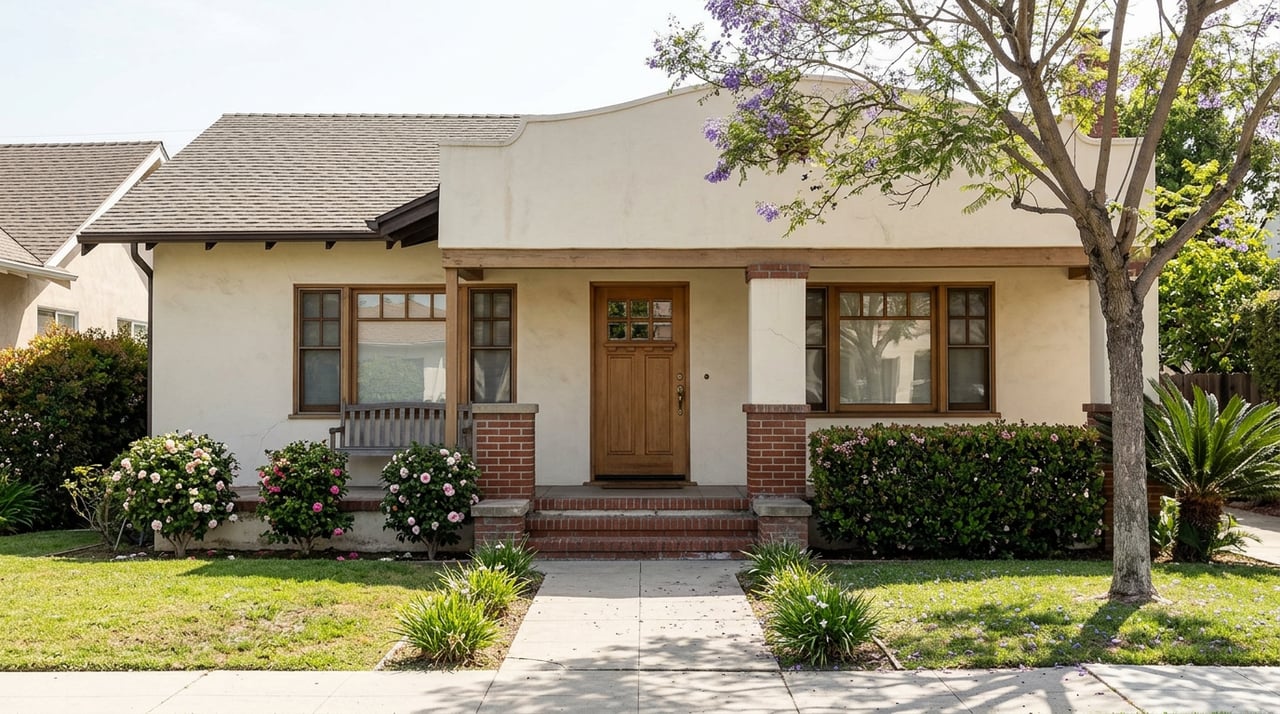
Picture two Burbank listings that hit the market in the same week, both priced around $1.3 million. One is a remodeled bungalow near West Magnolia Boulevard. It draws three offers, closes 8% over list, and is off the market in under a month. The other sits east of Interstate 5, closer to Olive Avenue. It gets one offer, closes right around list price, and takes closer to seven weeks to get there.
Same city. Same price tag. Completely different buying experience.
That gap is the story Burbank's citywide median can't tell you. Over the three months ending June 2026, the city's median sale price ran $1.3 million, up 4.7% year over year, with homes averaging about 35 days on market and drawing roughly two offers apiece. Those numbers are accurate. They are also an average of at least three markets that don't behave anything like each other, and if you're shopping in Burbank right now, knowing which one you're actually looking at matters more than the headline figure.
Burbank's own Q1 2026 report put the median detached single-family price at $1.3 million, up 5% from the previous quarter and 2% year over year. That sounds like steady, predictable appreciation. But look one layer down and the picture gets messier. In March 2026, nearly half of Burbank homes sold above list, a sign that competition is still real in parts of the market. At the same time, 18.8% of listings had a price drop, and the share of homes selling above list fell 12.8 percentage points compared to the year before.
Both of those things are true at once because they're describing different homes. A detached bungalow in a tight, walkable pocket and a condo two miles away are not competing for the same buyer, and they are not moving at the same speed. The citywide median smooths that difference into a single number that doesn't actually describe any specific transaction happening in Burbank this month.
Here's what the three submarkets look like when you separate them out, using the most recent comparable data available:
| Submarket | Recent Median Sale Price | Days on Market | Sale-to-List Ratio |
|---|---|---|---|
| Magnolia Park (detached) | $1.3M–$1.59M, depending on sample | 22–30 days for updated homes; up to 136 days across the full dataset | 98.4%–111% |
| Rancho Adjacent | $1.3M | ~47–48 days | 101.6% |
| Downtown Burbank / Media Center (attached) | $850,000 | 41 days to 200 days | 98.2%–101.3% |
Notice that Magnolia Park and Rancho Adjacent post nearly identical median prices. What separates them isn't cost, it's how long you'll be waiting and how much competition you'll face to get there.
Magnolia Park is Burbank's most recognizable pocket of vintage character: 1940s storybook homes alongside Tudor Revival, Craftsman, Mission Revival, and ranch styles, most built before 1970 and rarely changing hands. West Magnolia Boulevard, known locally as Antique Row, is the neighborhood's main street, home to shops like Bearded Lady Vintage & Oddities and Blast from the Past, along with Porto's Bakery and Café and Tally Rand. The Chandler Bike Path, built along a former rail line, runs through the area and gives residents a car-free route toward Toluca Lake and beyond. The neighborhood sits close enough to Warner Bros. Studios, Walt Disney Studios, and Nickelodeon Animation Studio that plenty of residents commute by bike.
That desirability shows up directly in the numbers, and it shows up as a contradiction if you read only one data source. Recent turnkey sales in Magnolia Park closed 4% to 11% over list in roughly 22 to 30 days, which tells you demand is fierce for anything move-in ready. But a separate neighborhood dataset covering a wider slice of Magnolia Park sales put the median at $1.5925 million with 136 days on market. Those two facts aren't contradicting each other so much as describing different pools: a handful of fast, contested sales at the top of the market, and a broader set of transactions that includes homes needing work, oddly configured lots, or sellers who priced ambitiously and waited.
The practical takeaway if you're shopping here: don't anchor to a single median. Ask your agent to pull the last 90 days of closed sales specifically, because the neighborhood-wide average includes outliers that don't reflect what a well-prepared buyer will actually experience competing for a listed home this month.
Rancho Adjacent sits just south of Magnolia Park, bordered by Verdugo and Alameda Avenues and stretching from Hollywood Way across Interstate 5 to Glenoaks Boulevard. Olive Avenue cuts diagonally through the neighborhood and carries most of its restaurant and small-business activity, including World Empanadas and Ribs USA. The Gordon R. Howard Museum, home to the Burbank Historical Society, sits nearby, and the neighborhood borders the Los Angeles Equestrian Center to the south, which explains why you'll occasionally see riders on the surrounding streets. The housing stock here is more mixed than Magnolia Park's, blending single-family homes with apartment buildings, small commercial strips, and some industrial parcels, and a majority of the residential base is renter-occupied.
The price story is the interesting part. Rancho Adjacent's median sale price landed at $1.3 million as of February 2026, essentially matching Magnolia Park's lower range. But homes here took about 47 to 48 days to sell, roughly double the pace of Magnolia Park's fastest-moving comps, and closed at 101.6% of list. That's not a soft market. It's a market with more inventory variety and less single-family scarcity, which gives buyers a bit more room to think without needing to write an offer the day a listing hits.
If your goal is a Burbank address without competing in a three-week sprint, this is where that tradeoff plays out. You're not paying less to be here. You're paying a similar price for a different kind of housing stock and a market that doesn't move at Magnolia Park's pace.
Downtown Burbank and the neighboring Media Center posted nearly identical numbers in March 2026: a median sale price of $850,000 in both areas. Downtown's figure came from just 3 sales, with homes averaging 41 days on market and closing 1.3% over list. Media Center's median came from 5 sales, with a 98.2% sale-to-list ratio. Sample sizes that small mean these numbers are directional, not something you'd want to build a pricing strategy around on their own.
What the raw closed sales show more clearly is the spread in how long attached properties actually take to sell: recent Downtown transactions closed at list, slightly under list, or after marketing periods stretching to 71, 92, 115, and even 200 days. That range says more about this segment than any single median could. Condition, building quality, HOA reserve health, and parking configuration matter more here than they do in the detached-home segment, and buyers who are doing real due diligence, reading HOA financials, asking about special assessments, checking reserve studies, take longer to get to a decision. A 100-day marketing period for a Downtown condo isn't necessarily a red flag. It might just be the pace this part of the market moves at.
The price gap itself tells its own story. An earlier city report placed Burbank's median condo sale price at $743,000 in Q2 2025, compared with the Q1 2026 detached-home median of $1.3 million. That's a gap of more than half a million dollars, which is exactly why condos and townhomes remain the most realistic entry point for buyers who want a Burbank zip code without a detached-home budget, even though that segment plays by a different set of rules.
The single most useful thing you can do before writing an offer in Burbank right now is figure out which of these three markets you're actually in, because the same 90-day marketing period means something completely different depending on the answer. In Magnolia Park, a listing that's been sitting for three months is worth a closer look at why. In Downtown or Media Center, it might just be normal.
If speed and competition don't scare you off, Magnolia Park still rewards well-prepared buyers who can move fast on turnkey inventory. If you'd rather have room to negotiate while still landing inside city limits, Rancho Adjacent's slower pace and more varied housing stock is worth a look. And if your budget caps out closer to $850,000, expect the attached-home process to take longer, not because nobody wants to buy, but because the due diligence involved is genuinely more involved.
Is Burbank currently a buyer's market or a seller's market? Both, depending on the segment. Well-priced detached homes in tight pockets like Magnolia Park still draw competition. Attached homes and properties needing work are seeing more price drops and longer marketing periods, which gives buyers more leverage in that part of the market.
Why did some Burbank homes sell under list in 2026 while others sold well above it? Nearly half of March 2026 sales closed above list, but 18.8% of listings had a price cut, and the share selling above list is down significantly from the year before. That split reflects the same submarket divide covered here: contested detached homes on one side, more patient buyers evaluating condos and older attached product on the other.
Does a lower median price in a neighborhood like Rancho Adjacent mean it's a lesser place to live? No. It reflects a different mix of housing stock, including more multi-family and mixed-use parcels alongside single-family homes, not a judgment about the neighborhood itself. Price differences here track housing type and market pace, not quality.
If you're trying to figure out which Burbank submarket actually fits your budget, your timeline, and how much competition you're willing to take on, that's exactly the kind of question worth working through with someone who watches these numbers closing by closing. Mounika Haftavani has spent 16 years inside the Glendale-Burbank-Pasadena corridor and can walk you through what's really happening in the pocket you're considering. Schedule a free consultation and let's talk about your next move.
Stay up to date on the latest real estate trends.
Mounika thrives on helping her clients realize their goals by taking the time to explain the process and being the person they can trust when making one of the most important investments of their lives.