Glendale Apartment Building Regulations Buyers Should Know
September 10, 2026
September 10, 2026
According to Optimum Seismic's report, before Glendale ever floated a mandatory seismic retrofit ordinance, property manager David Schultz was already walking one of his clients, Mark Boyd, through the case for retrofitting Boyd's 20-unit apartment building at 1256 Boynton Street. There was no city requirement forcing the work, and there still isn't, according to the City of Glendale's Building Official in May 2026. Boyd did it anyway, telling a reporter at the time that protecting his tenants was reason enough. Optimum Seismic, the contractor on the job, had completed 13 similar retrofits across Glendale by the time that story ran.
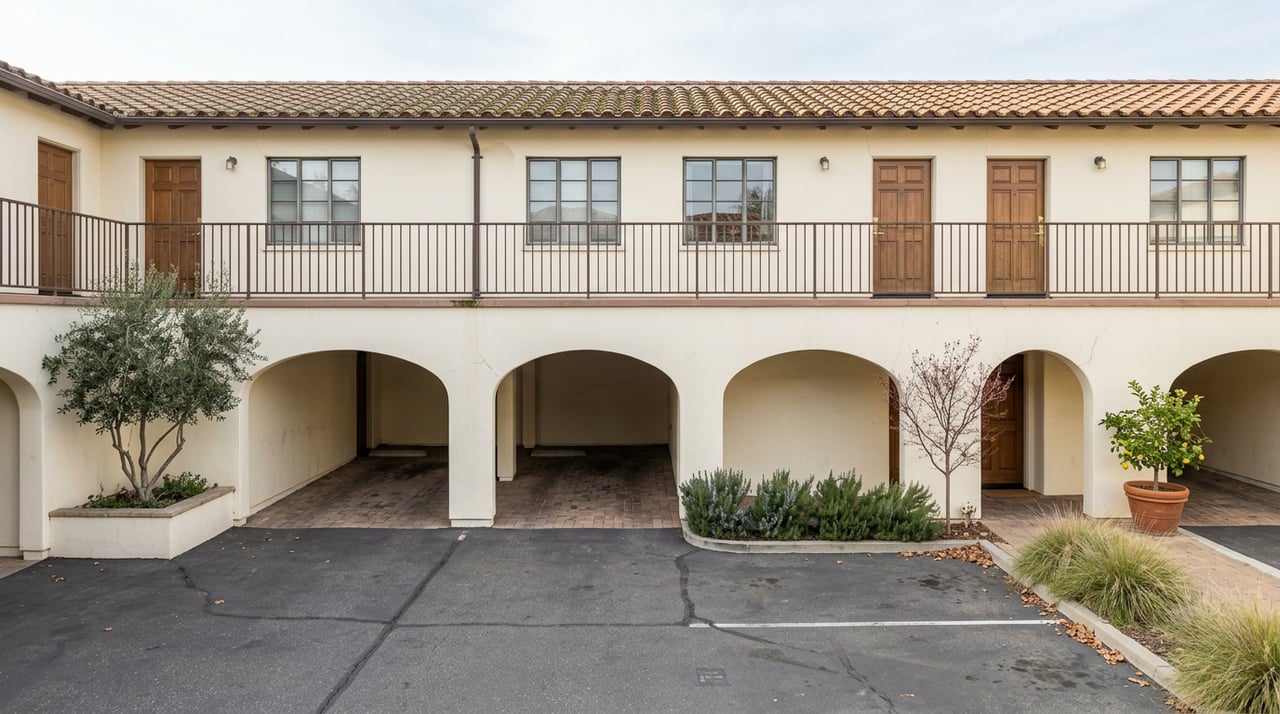
Most Glendale apartment owners haven't followed Boyd's example. The City of Glendale's Building & Safety Division reported in May 2026 that only about 35 property owners across the entire city have voluntarily retrofitted so far, out of roughly 1,000 buildings the city estimates carry the same soft-story weakness behind catastrophic building collapses in the 1994 Northridge earthquake. That leaves nearly 28,000 Glendale residents, about 15 percent of the city's population, living above ground floors the city has publicly flagged as vulnerable.
If you're underwriting a Glendale multifamily deal right now, that number matters more than it looks. It's not just a public safety footnote. Glendale's voluntary approach differs from Pasadena's mandatory program, and a building's seismic status is worth checking before your inspection contingency is gone.
According to Custom Home, California law requires sellers to disclose known material defects on the Transfer Disclosure Statement, and a seismic deficiency the seller actually knows about falls under that obligation. The word doing the work in that sentence is "known." In Los Angeles, an owner of a qualifying soft-story building receives a formal Order to Comply from the Department of Building and Safety, which starts a clock: two years to submit plans, three and a half years to pull a permit, seven years to finish construction. That order creates a paper trail. It forces an engineer to look at the building and put findings in writing, which becomes something a seller has to disclose whether they want to or not.
Pasadena runs the same kind of program, adopted in 2019, with its own inventory of buildings and its own compliance timeline.
Glendale has neither. There's no Order to Comply, no city-mandated engineering report, no forced paper trail. An owner who has never had an assessment done has nothing concrete to disclose, and the transfer disclosure process has no mechanism to manufacture that knowledge for them. A buyer relying on the seller's TDS alone, in a city where the seismic evaluation was never required in the first place, can walk into escrow with a building that has the exact same structural profile as one in Pasadena, minus the paperwork that would have surfaced it.
The regulatory gap shows up clearly once you line the three cities up side by side.
| City | Soft-Story Retrofit Status | Adopted | Local Tenant Protection |
|---|---|---|---|
| Los Angeles | Mandatory (Ordinance 183893) | 2015 | Rent Stabilization Ordinance, with registration and a rent board |
| Pasadena | Mandatory | 2019 | Rental Housing Fee and Tenant Protections ordinance, effective February 2022 |
| Glendale | Voluntary only | Not yet adopted | Rental Rights Program (Ordinance #5922), effective March 2019, updated March 2024 |
The Glendale Rental Rights Program still gives tenants real protections: just-cause eviction requirements and relocation assistance. The Foothill Apartment Association says tenants are entitled to relocation assistance when a rent increase exceeds 7 percent and landlords must offer a one-year lease. What it doesn't do is create the kind of rent board and registration structure Los Angeles runs, and it says nothing at all about seismic retrofits. The city's own Community Development Department flagged seismic retrofit programs as a short-term priority back in 2024, with City Council support behind it, but as of this writing that direction hasn't turned into an ordinance.
The following figures provide context for the multifamily market.
In the first half of 2026, Glendale's multifamily market saw $92.6 million in sales volume across 35 transactions, with an average cap rate of 5.5 percent and a price per unit of $299,500. A separate look at the broader Glendale-Pasadena-Burbank investment corridor in the first quarter of 2026 put the average price per unit across the submarket at $319,000, with Burbank commanding the highest premium in the group at $373,000 per unit. Pasadena led the corridor in deal count that quarter, with 22 transactions totaling $58.1 million.
Glendale is trading below its own neighbors. Burbank's rental market benefits from proximity to Walt Disney Studios, Warner Bros., and NBCUniversal. Pasadena's mandatory retrofit program provides a different regulatory context. Those differences are worth considering, but the price figures alone don't tell us what accounts for the gap.
Glendale hasn't had that regulatory resolution. With roughly 1,000 buildings estimated to have the weakness and only 35 confirmed retrofits, buyers have reason to ask questions during due diligence. None of this means every discounted Glendale building has a hidden seismic problem. These citywide numbers don't establish the condition of any particular building; that takes a property-specific assessment.
If you're underwriting a multifamily property in Glendale with ground-floor parking or open commercial space, the standard disclosure packet isn't enough on its own. A few concrete steps can help close the gap:
Retrofit costs for this class of building typically start around $60,000 and climb into the mid six figures, with larger or structurally complex buildings reaching $350,000 or more, based on figures from contractors active in the Los Angeles retrofit market. Those are estimates, not a price tag for your building. The potential cost is worth looking into during due diligence.
If Glendale has no ordinance, am I still required to disclose a seismic problem when I sell? Yes, if you actually know about it. California's Transfer Disclosure Statement requirement under state civil code covers known material defects regardless of whether a local retrofit mandate exists. The complication in Glendale is that without a city-mandated engineering assessment, many owners genuinely don't know, and the law only obligates disclosure of what a seller actually knows.
Does this affect single-family homes too? No. The soft-story retrofit issue is specific to multi-story wood-frame buildings with open ground floors, typically apartment buildings with tuck-under parking or ground-floor commercial space. Single-family homes aren't part of this particular risk category.
Could Glendale still pass a mandatory ordinance? The city's Community Development Department identified it as a short-term priority in 2024 with City Council backing, and the Building & Safety Division has been publicly building the case for one as recently as May 2026. Nothing has passed yet, but the direction of travel suggests buyers shouldn't assume the current voluntary status is permanent.
If you're comparing Glendale against Pasadena or Burbank for a multifamily purchase and want to know what a specific building's retrofit exposure actually looks like before you write an offer, that's exactly the kind of groundwork worth doing before contingencies start expiring. Mounika Haftavani works this corridor closely and can walk you through what to check, who to call, and how it should shape your number. Schedule a free consultation and let's talk about your next move.
This article is general information, not legal, tax or financial advice. Consult a qualified professional about your situation.
Stay up to date on the latest real estate trends.
Mounika thrives on helping her clients realize their goals by taking the time to explain the process and being the person they can trust when making one of the most important investments of their lives.