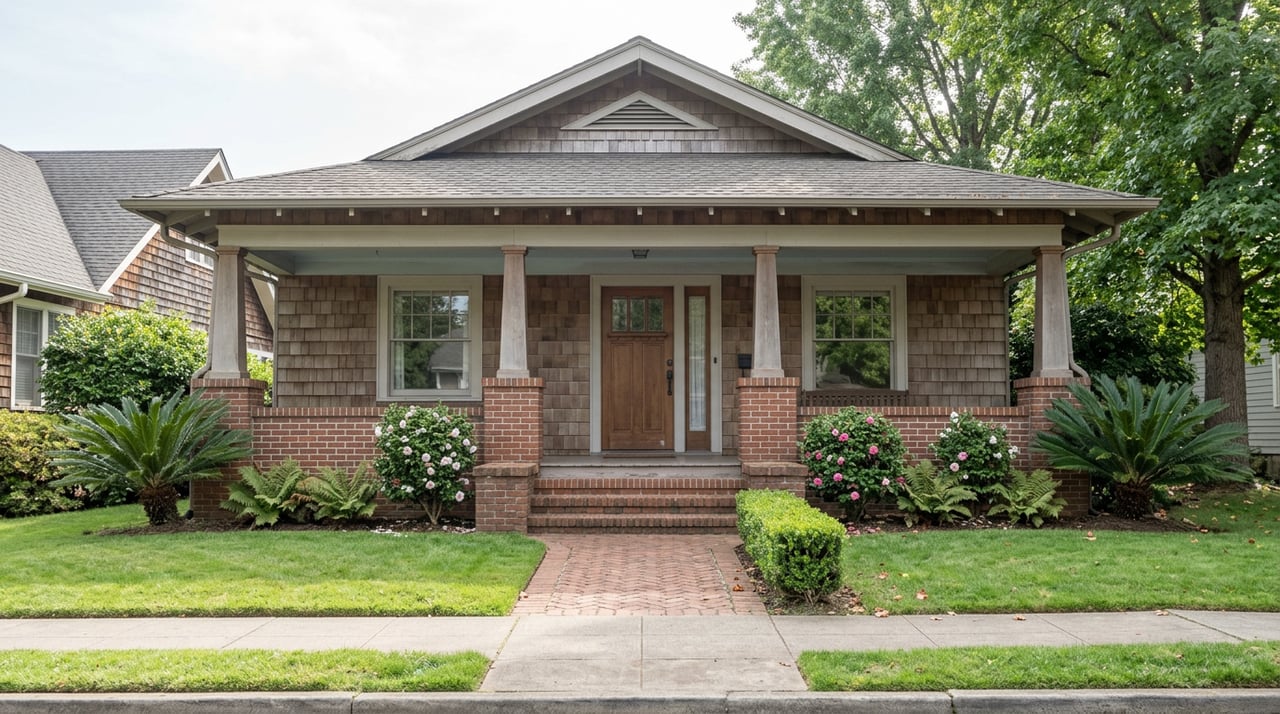
Buying a Historic Home in Pasadena? What Delays Closing
August 20, 2026
August 20, 2026
Most buyers who fall for a Craftsman on Chester Avenue or a Spanish bungalow off Holliston spend their nervous energy on the wrong form. They've read that Pasadena's historic district rules can bring a design review board into decisions about paint colors or a new roof. So they brace for a fight over history.
The fight rarely happens there. The thing that actually stalls a Bungalow Heaven closing has nothing to do with whether the house is historic at all. It's a citywide certificate every seller in Pasadena has to produce, historic designation or not, and a piece of underground plumbing that no standard inspector will ever look at.
Pasadena runs a Presale Self-Certification Program under Ordinance No. 7337 and Municipal Code Section 14.17. Before escrow closes on a single-family home, condo, townhome, or duplex anywhere in the city, the seller has to obtain either a Presale Certificate of Completion or a Presale Certificate of Inspection. This applies to a 2019 townhome in the Playhouse District exactly as much as it applies to a 1908 bungalow in Bungalow Heaven. It is not a historic-preservation rule. It's a life-safety code check, and it catches out-of-town buyers and first-time Pasadena sellers because most nearby cities don't run anything like it.
The distinction between the two certificates is where timelines actually get made or broken. A property may qualify for self-certification and the faster Certificate of Completion; otherwise, the seller needs a Presale Certificate of Inspection, which means scheduling an actual city inspector and waiting for a housing inspection report before escrow can close.
| Certificate of Completion | Certificate of Inspection | |
|---|---|---|
| Who qualifies | Meets the self-certification criteria | Doesn't meet the self-certification criteria |
| How it's obtained | Self-certification, online or at the Permit Center | City schedules and conducts an inspection |
| What can slow it down | Any applicable sidewalk issue | Inspection scheduling, plus any code deficiencies the report flags |
| Related cost | Possible sidewalk repair costs | Possible sidewalk repair costs, plus repair time for anything the report cites |
That sidewalk detail is worth sitting with. The city periodically inspects abutting sidewalks, and if yours needs work, it can complicate the process. On a tree-lined Bungalow Heaven block where mature roots have been lifting concrete for a century, that's not a hypothetical concern. It's a real conversation to have with a listing agent before the property ever goes on the market, not after an accepted offer.
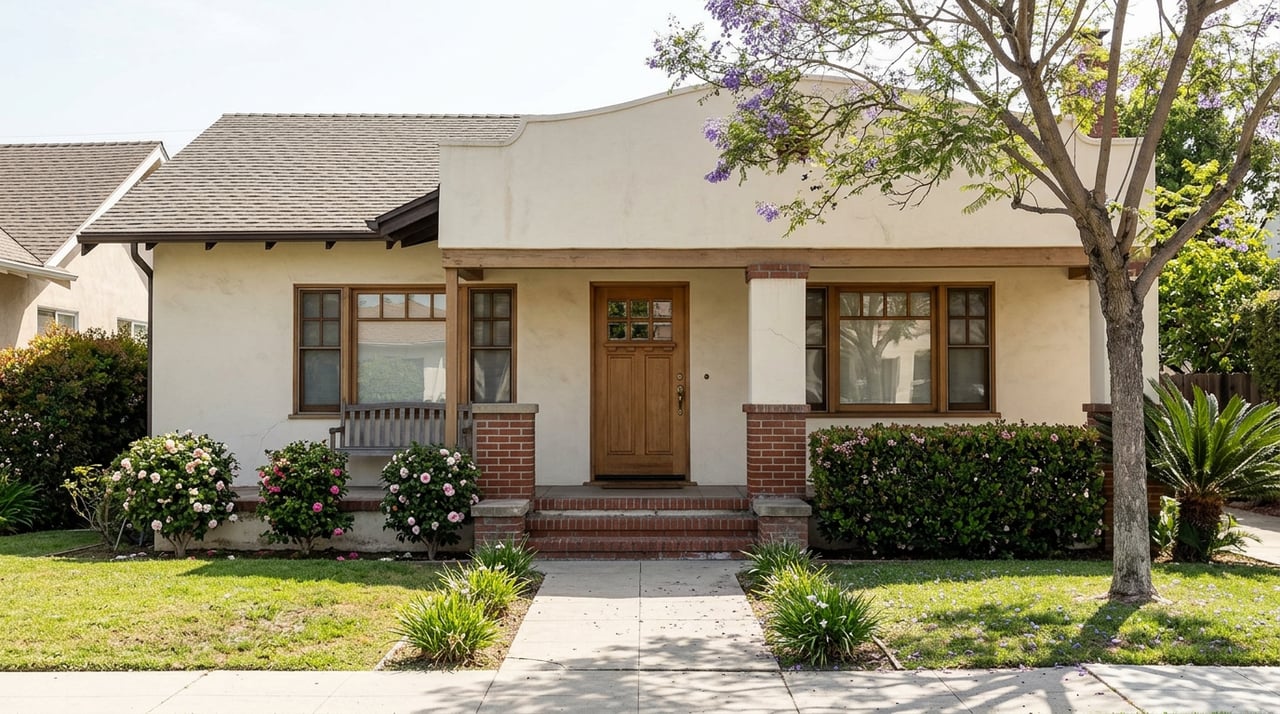
Bungalow Heaven's housing stock mostly dates to 1905 through 1920, with the oldest structure going back to 1888. The district was Pasadena's first Landmark District, designated in 1989, and most of it joined the National Register of Historic Places in 2008. Six blocks by six blocks, centered on McDonald Park, with the kind of mature street canopy that makes the neighborhood look the way people picture it. That canopy is also the reason sewer laterals fail here more often than in newer parts of the city.
A standard home inspection does not include the underground line running from your house to the city's sewer main. That's a separate service, usually a camera scope run by a licensed plumber, and in Pasadena it typically runs $125 to $500 for a straightforward pre-purchase scope, more like $175 to $750 if there's no accessible cleanout. Skipping it on a century-old property with root systems that have had decades to find their way into clay or cast iron pipe is a bet, not a shortcut. If the scope does turn up a problem, fixing it isn't a quick weekend job either. Western Rooter says Pasadena requires a Public Works permit for any sewer repair in the public right-of-way, and if the fix is a trenchless relining, the owner also puts down a refundable construction deposit on top of the repair cost itself.
None of this is unique to Pasadena. It's a pattern in most Southern California neighborhoods built before mid-century. What's specific to Bungalow Heaven is the concentration of original clay and cast iron lines still in the ground, paired with landmark-district rules.
For a buyer serious about a Bungalow Heaven property, here's the sequence that actually protects your closing date:
Skip any one of these and you're not avoiding the friction, you're just meeting it later, usually with less time to react.
Bungalow Heaven has stayed a competitive, fast-moving pocket of Pasadena through the first half of 2026, with homes typically going under contract within about a month of listing. Pricing has softened slightly compared to a year earlier rather than continuing to climb, which matters less for the headline number and more for negotiating leverage. A slower, more balanced market gives buyers more room to ask for a full sewer scope and clarity on the Presale Certificate before removing contingencies, exactly the requests that get waved off when a listing has five offers on day one.
Does a non-historic house in Pasadena still need a Presale Certificate? Yes. The Presale Self-Certification Program applies to single-family homes, condos, townhomes, and duplexes citywide, independent of any historic designation.
What should I know about a sewer scope? Standard inspections don't cover the underground lateral, and older bungalow neighborhoods with mature trees carry real risk there. Treat it as a standard part of due diligence rather than an optional add-on.
If you're weighing a purchase or sale in Bungalow Heaven or anywhere else in the Pasadena foothills and want someone who has walked this exact sequence before, Mounika Haftavani can help you sort what's routine from what actually needs a closer look. Schedule a free consultation and let's talk about your next move.
This article is general information, not legal, tax or financial advice. Consult a qualified professional about your situation.
Stay up to date on the latest real estate trends.

Mounika thrives on helping her clients realize their goals by taking the time to explain the process and being the person they can trust when making one of the most important investments of their lives.