La Crescenta Unincorporated vs Glendale Annexation: What Buyers Should Know
September 17, 2026
September 17, 2026
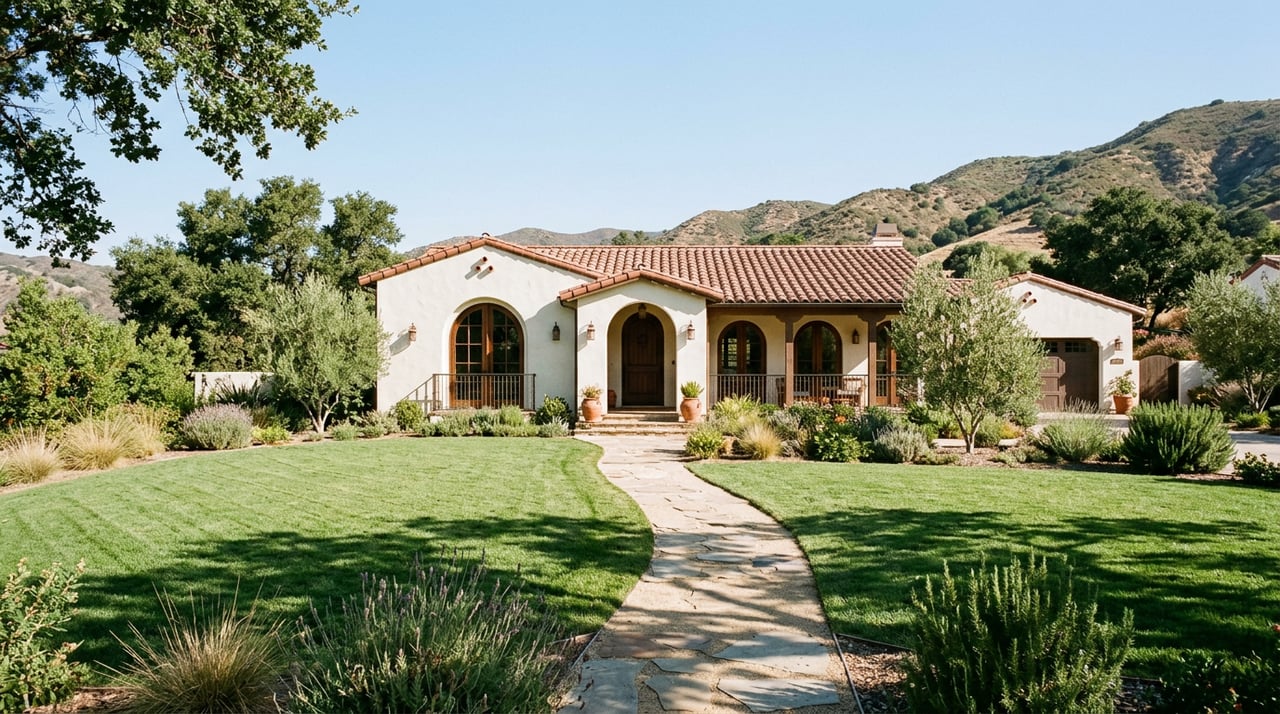
Drive down Pennsylvania Avenue in La Crescenta and nothing marks the crossing. The ranch houses look the same on both sides. The oaks lean the same direction. A For Sale sign a block north of Foothill Boulevard looks identical to one a block south. But step into escrow on either side of that street and you are suddenly working with two different police departments, two different building departments, and in some cases two different water bills for the same tap.
Most guides to this neighborhood describe La Crescenta as a single foothill community with mountain views and good schools. That description is true and also incomplete. La Crescenta is not one jurisdiction. Part of it belongs to unincorporated Los Angeles County. Part of it was annexed into the City of Glendale, and the line between the two runs roughly along Pennsylvania Avenue. That line was drawn in the early 1950s over a fight about water, not planning, and it still decides which government answers your call today.
After World War II, the Crescenta Valley grew fast enough that its local wells started running dry. Glendale already had access to imported Colorado River water through its membership in the Metropolitan Water District, and in 1949 it offered the valley an emergency connection. That same year, a ballot measure to annex the entire valley to Glendale was voted down. Glendale did not give up. It came back and offered annexation neighborhood by neighborhood instead of all at once.
Meanwhile, the rest of the valley organized its own path to imported water. The Crescenta Valley County Water District formed on December 14, 1950. State Assemblyman Frank Lanterman of La Cañada pushed through a change in state water law that let unincorporated areas join the Metropolitan Water District through a new joint agency, the Foothill Municipal Water District. Voters in Altadena, La Cañada, and the Crescenta Valley approved that district on December 18, 1951.
Glendale beat them to the finish line by exactly one week. Its own annexation election landed on December 11, 1951, and it passed by a slim margin. The annexed territory included the Montrose business district and a swath of land bounded roughly by Honolulu Avenue, Rosemont Avenue, Montrose Avenue, and Pennsylvania Avenue, running north to the mountains. Everything inside that line became Glendale. Everything outside it stayed unincorporated Los Angeles County, governed directly by the county rather than a city hall.
The annexed section is still known locally as the Glendale annex, or Crescenta Highlands, sitting roughly between Pennsylvania and Lowell Avenues. Tracts like Glenwood Oaks, a 30 acre, 90 home community the Anderson Brothers built in 1954, sit inside that annexed footprint, alongside Markridge Estates, a hillside enclave of about 40 homes built around a shared tennis court. Everything outside that footprint, on the other side of Pennsylvania Avenue, answers to the county instead of a city hall.
For a buyer, the practical weight of that 1951 vote shows up the moment you need something from local government. On the unincorporated county side, building permits, plan checks, and code enforcement run through Los Angeles County. Law enforcement runs through the Sheriff's Department. On the Glendale side, all of that runs through the city's own departments instead.
Accessory dwelling units make the split concrete. Los Angeles County has its own ADU rules for unincorporated La Crescenta.
Glendale writes its own ADU ordinance with its own numbers. A floor plan that pencils out on the county side of Pennsylvania Avenue is not guaranteed to pencil out on the city side, and a contractor who has only ever pulled permits through Los Angeles County Public Works may need a different playbook once the parcel sits inside city limits. Before anyone gets attached to a backyard addition, it is worth confirming which agency actually has jurisdiction over that specific parcel.
The water fight that created this border left a second, quieter mess behind. Crescenta Valley Water District's voting boundary was set by that same 1950 to 1951 dividing line, and it does not perfectly match the district's actual service area. Local reporting from Crescenta Valley Weekly in October 2024 documented residents in the Hermosa Avenue area of Montrose asking why they could not vote for CVWD board candidates even though the district delivers their water. The answer traced back to old pipeline ownership: when CVWD formed, it absorbed infrastructure from smaller private water companies, some of which served customers who ended up outside the district's official voting boundary. The district's general manager confirmed the situation is well known internally and that some customers still pay both Glendale Water and Power and CVWD for reasons rooted in who owns which pipe, not where the property lines actually fall.
The line that decided which water agency served your grandparents in 1951 still decides which agency bills you in 2026.
None of this is a defect in how anyone manages the system today. It is simply what happens when a modern transaction runs into a 75 year old political compromise. A buyer who assumes their water provider matches their mailing address or their assumed city can end up surprised by a bill from an agency they never signed up with.
This same boundary confusion shows up in the numbers before a buyer ever gets to permits. Search for La Crescenta home prices and you will get answers that do not agree with each other, and the reason has nothing to do with a volatile market. It has to do with which land a given tracker counts as La Crescenta.
Redfin's page for the "La Crescenta-Montrose" area, which covers the unincorporated CDP, showed a median sale price near $1.4 million in November 2025. Redfin also runs a separate page that files "La Crescenta" as a neighborhood of the City of Glendale rather than the county CDP, likely reflecting a boundary closer to the historic Glendale annex than to the unincorporated side, and that page showed a median sale price of $815,000 over its most recent trailing three month window. Two pages, two boundaries, one neighborhood name, and a spread of well over half a million dollars.
The most current read available is a listing based figure from Movoto: as of September 2026, the median list price across La Crescenta sat at $1.22 million, down about 10 percent from the same month a year earlier, with homes spending a median of 57 days on market. That number is useful, but it still comes from a source drawing its own boundary around what counts as "La Crescenta." A buyer comparing that figure to a number they saw on a different site is not necessarily comparing the same footprint of land twice.
The takeaway is not that one tracker is right and another is wrong. It is that a median price is only as good as the boundary behind it, and in this particular corner of the foothills, the boundary has been contested since before most current listings were built.
Does the annexation line affect which schools serve the property? No. Both the unincorporated side and the Glendale annexed side feed into Glendale Unified School District, so a family is not choosing districts by choosing sides of Pennsylvania Avenue.
Does being on the county side or the city side change fire insurance? Not directly. Insurance underwriting follows the property's position on the state's Fire Hazard Severity Zone map, which runs across both sides of the annexation line rather than following it. A property's zone designation, roof age, and defensible space matter far more to a carrier than which government issues its building permits.
La Crescenta rewards a buyer who asks a second question after the first answer sounds too clean. The median price on a portal, the agency that will process your ADU application, and the utility that shows up on your closing statement all trace back to a vote nobody in escrow today was alive to cast. Knowing where that line actually falls, before an offer goes in rather than after, is the difference between a smooth close and a surprise call to a department you did not know you needed.
If you are weighing a specific La Crescenta address and want to know exactly which side of that 1951 line it sits on, Mounika Haftavani can pull the parcel history before you write the offer. Schedule a free consultation and let's talk about your next move.
This article is general information, not legal, tax or financial advice. Consult a qualified professional about your situation.
Stay up to date on the latest real estate trends.
Mounika thrives on helping her clients realize their goals by taking the time to explain the process and being the person they can trust when making one of the most important investments of their lives.