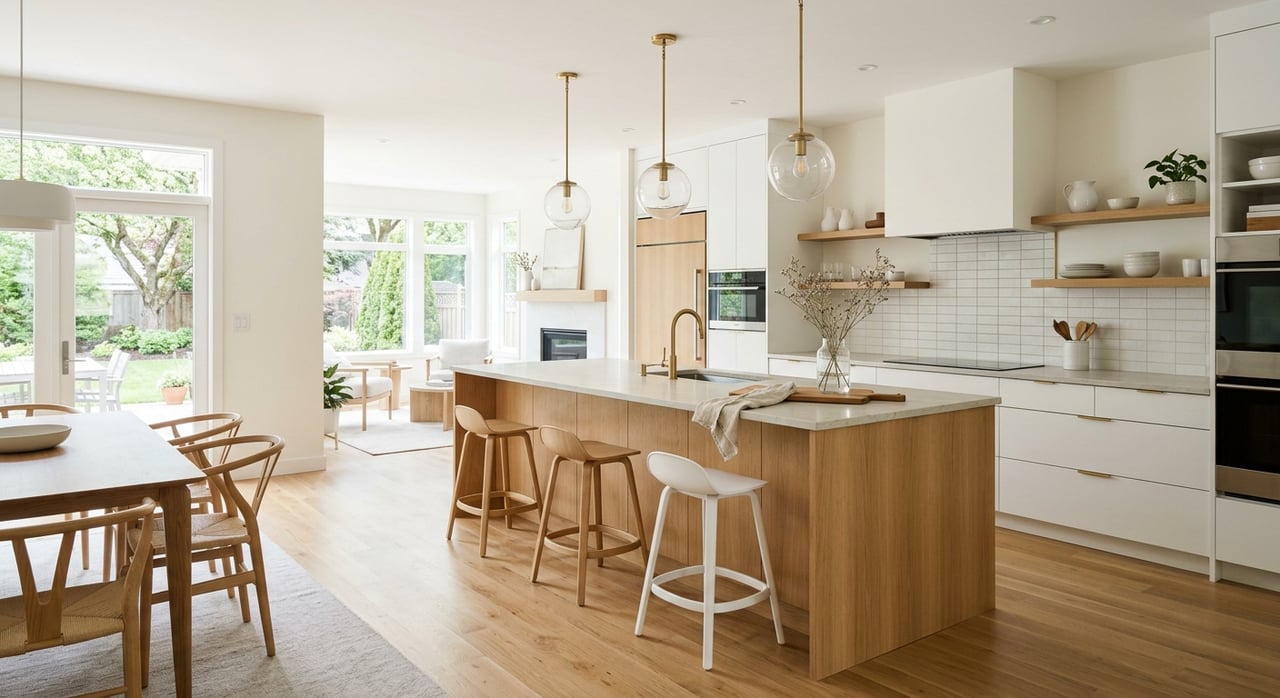
Granada Hills Single Family Homes: Key Buying Insights
June 18, 2026
June 18, 2026
Wondering whether a single-family home in Granada Hills is the right fit for your next move? If you are shopping in the northwest San Fernando Valley, this neighborhood can offer a compelling mix of space, classic postwar homes, and a market position that sits above some nearby areas without reaching the highest Valley price points. Understanding how pricing, location, housing style, and property due diligence work here can help you move with more confidence. Let’s dive in.
Granada Hills sits in the middle-upper tier of the northwest San Fernando Valley market. In May 2026, the median sale price was about $999,664, which places it above North Hills and Chatsworth, roughly in line with Northridge, and below Porter Ranch.
That pricing tells you something important right away. Granada Hills is not the bargain play in this part of the Valley, but it is also not the top of the pricing ladder. For many buyers, that makes it a market where value depends on choosing the right block, lot, and condition level for your budget.
Homes here also move at a healthy pace. Recent market data show homes selling in about 34 to 35 days on average, with many receiving multiple offers.
Some homes sell around list price, while more competitive properties can go pending in about 17 days and sell roughly 4% above list. The reported sale-to-list ratio of 100.3% and the fact that 47.9% of homes sold above list suggest you should be ready for competition, especially on well-presented homes.
One of the biggest things to know about buying here is that not all of Granada Hills is priced the same. The north section has recently been notably more expensive than the south section, with median pricing around $1.15 million versus about $910,000.
That is a meaningful gap of roughly 26%. In practical terms, two homes with similar bedroom counts may command very different prices depending on where they sit within the neighborhood.
This matters when you are building your search strategy. If your budget feels stretched, you may need to decide which tradeoff matters most to you:
In Granada Hills, those features do not always come together at the same price point. Knowing your priorities before offer time can help you act faster and negotiate more clearly.
Granada Hills is known for its postwar residential development pattern. City research shows major subdivision growth beginning in the mid-1950s, peaking in 1955 and 1956, and largely building out by 1965.
That history still shapes what you see on the market today. Many single-family homes follow Ranch-style designs and similar floor plans, especially in established residential pockets.
In Marlborough Palms, for example, homes built in 1957 and 1958 were generally one-story single-family residences with 3- or 4-bedroom layouts, two baths, and a family room or den. That gives you a helpful baseline for what “typical” Granada Hills housing stock often looks like.
Today, many standard ranch homes commonly fall in the roughly 1,400 to 2,000 square foot range. Larger renovated or newer homes can exceed 3,000 square feet, but they are not the baseline product in the neighborhood.
Lot sizes are another key part of the appeal. Many homes sit on lots around 7,500 to 10,500 square feet, with some larger parcels ranging from roughly 0.41 to 0.78 acres.
For buyers who want outdoor space, this can be one of Granada Hills’ strongest draws. A larger lot can support future lifestyle flexibility, whether you are thinking about entertaining, gardening, storage, or simply wanting more separation between homes.
While the classic ranch home is the dominant pattern, there are exceptions. One notable architectural pocket is Balboa Highlands, which the City of Los Angeles notes was built in the 1960s by Joseph Eichler.
That means your Granada Hills search may include more than one type of design language. Some buyers are drawn to the straightforward function of traditional ranch layouts, while others may prefer a more distinct architectural identity when it becomes available.
The key is to avoid assuming every home will offer the same feel just because they are in the same neighborhood. Granada Hills has recurring patterns, but not total uniformity.
In a competitive market, preparation matters as much as price. With many homes attracting multiple offers, a strong preapproval and the ability to make decisions quickly can improve your position.
That does not mean rushing blindly. It means doing enough homework before you find the right house so that you can move with purpose when the moment comes.
A smart offer strategy in Granada Hills usually starts with a few clear questions:
Mortgage rates affect monthly affordability in a direct way. With the 30-year fixed mortgage reported at 6.48% as of June 4, 2026, small price jumps can noticeably change your monthly payment.
That is why it helps to define your comfort zone before you tour too many homes above it. In a market where some properties sell over asking, emotional shopping can become expensive fast.
Granada Hills buyers often face a balancing act. You may be able to afford a more updated home in one part of the neighborhood, or a better location with more cosmetic work, or a larger lot with an older layout.
If you know your non-negotiables ahead of time, you can write cleaner offers and avoid second-guessing yourself under pressure.
Not every listing will behave the same way. A move-in-ready home with a desirable lot, appealing presentation, and strong location may attract more urgency than a property that needs updates.
That is where local pricing analysis and negotiation guidance become especially valuable. Looking at the neighborhood median is helpful, but your offer lives or dies on the details of the specific home in front of you.
Granada Hills has many older homes, which makes property condition a major part of the buying process. For any single-family purchase, an independent home inspection is an important step.
Core systems deserve close review, including:
For older homes, insulation and air sealing also deserve attention. These items may not be as visible during a showing, but they can affect comfort, utility costs, and future upgrade planning.
Some Granada Hills parcels need added scrutiny because hillside and hazard-related factors can affect the property. Local city and fire guidance points buyers toward checking whether a property is in a hillside, mud-prone, or fire-severity zone.
If the home you are considering sits on or near hillside terrain, take time to verify:
These checks are especially important before shortening or waiving contingency timelines. A home can look attractive at first glance, but site-specific conditions may affect both ownership costs and your long-term comfort level.
Buying a single-family home in Granada Hills is often about understanding value in layers. Price is only one layer. You also need to weigh location within the neighborhood, lot size, floor plan, condition, and any hillside-related due diligence.
For many buyers, Granada Hills can be appealing because it offers a strong single-family-home identity, established residential streets, and more breathing room than some nearby options. At the same time, it remains a competitive market where preparation and fast clarity matter.
If you go in knowing what kind of home fits your budget and what tradeoffs you are willing to make, you will be in a much better position to buy well. That kind of preparation can turn a stressful search into a more focused and confident one.
If you are weighing neighborhoods, comparing lot sizes, or trying to understand how to compete without overreaching, Mounika Haftavani can help you navigate your next move with clear guidance and responsive support.
Stay up to date on the latest real estate trends.
Mounika thrives on helping her clients realize their goals by taking the time to explain the process and being the person they can trust when making one of the most important investments of their lives.